Ordinary Environments and Aesthetics in Contemporary Indian Ocean Archipelagic Writings

Textile art of women community members from the archipelago of Sundarbans depicting the process of honey collection from bee-hives. Exhibited at Delta Lives Exhibition, 2022.
At a time when the Indian Ocean is increasingly militarized, securitized and the oceanic islands are in the headlines because of climate change, I narrate the Indian Ocean through an environmental imagination that is not crises driven. In my dissertation which I intend to revise into my first book project, “Ordinary Environments and Aesthetics in Contemporary Indian Ocean Archipelagic Writings”, I make two fundamental contributions.
First, I take an archipelagic approach to the study of postcolonial and global Anglophone to argue that a feminist and decolonial perspective of the environment emerging out of the Indian ocean archipelagos is central to envisioning subtle forms of environmental justice that cannot be captured in the language of climate crisis. Second, I advance a revision of the term archipelagic by arguing how the archipelagic is not only a place within cartographies imaginaries of global anglophone but also a literary form that can illuminate different scales of environmental time (boat time, tide time). This is crucial to conceiving models of environmental justice that mark a shift from normative legal thinking of environments. I demonstrate that the lens of the archipelagic restructures the Anglophone by foregrounding literary narrative that cannot be meta-eclipsed or submerged into a single form of capitalism or empire. Each chapter of my book advocates for a particular mode of archipelagic aesthetics, in three distinct archipelagic and postcolonial geographies: tidal ecologies in the Sundarbans, botanical and carceral imaginaries in the Andamans, and plantation poetics in the Chagos.
I primarily work with contemporary literary texts in two languages (Bangla and English) such as periodicals (Somokaler Jiyonkathi, Sudhu Sundarban Charcha), novels (Latitudes of Longing, The Miraculous True History of Nomi Ali, The Last Wave, Glorious Boy, Silence of Chagos) and poetry (Saradha Soobrayen’s chapbook) to advocate for an ethical environmental literary criticism that would pay attention to the surprises, tensions and tensions of living in the archipelagos. I investigate the links between the presence of multiple empires in the Indian Ocean world and the capacity of Indian Ocean narrative traditions to exceed the epistemological categories of US and British European colonialism to articulate a just environmental future.
Publications
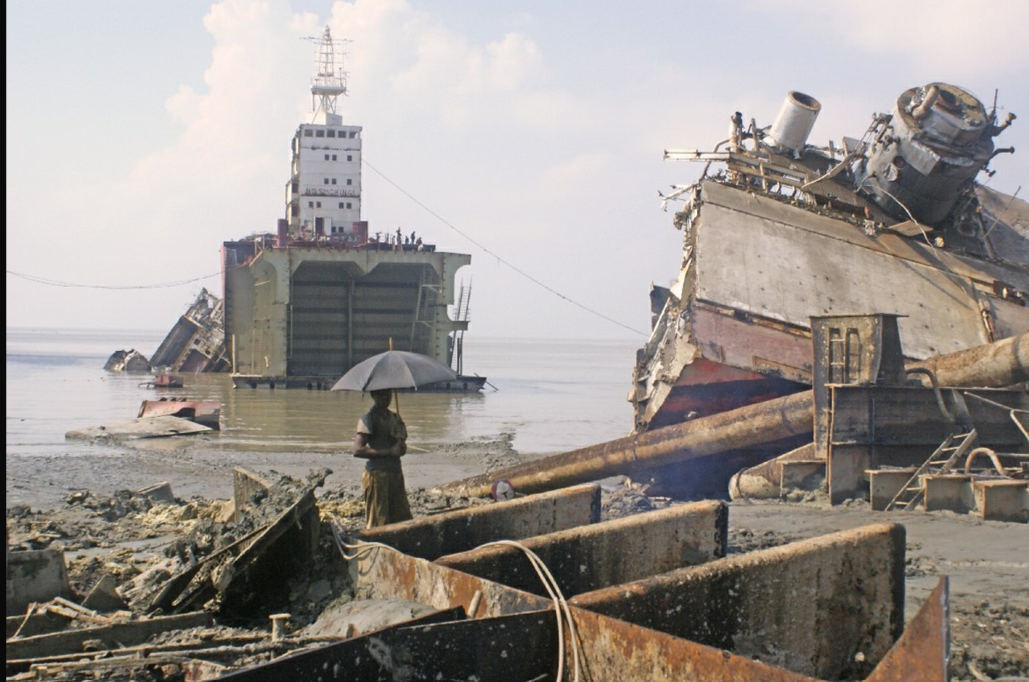
Chatterjee, Sritama. 2022. “Off-Shore Aesthetics and Waste in the Ship-Breaking Literature of Bangladesh.” South Asian Review 44 (2): 70–84. doi:10.1080/02759527.2022.2145745.

Qadir, Neelofer, Kelvin Ng, Sabine Mohamed, Sritama Chatterjee, and Johan Mathew. "The Infrastructural Embodiments of Laleh Khalili's Sinews of War and Trade." Verge: Studies in Global Asias 10, no. 1 (2024): 52-71. https://dx.doi.org/10.1353/vrg.2024.a922358.
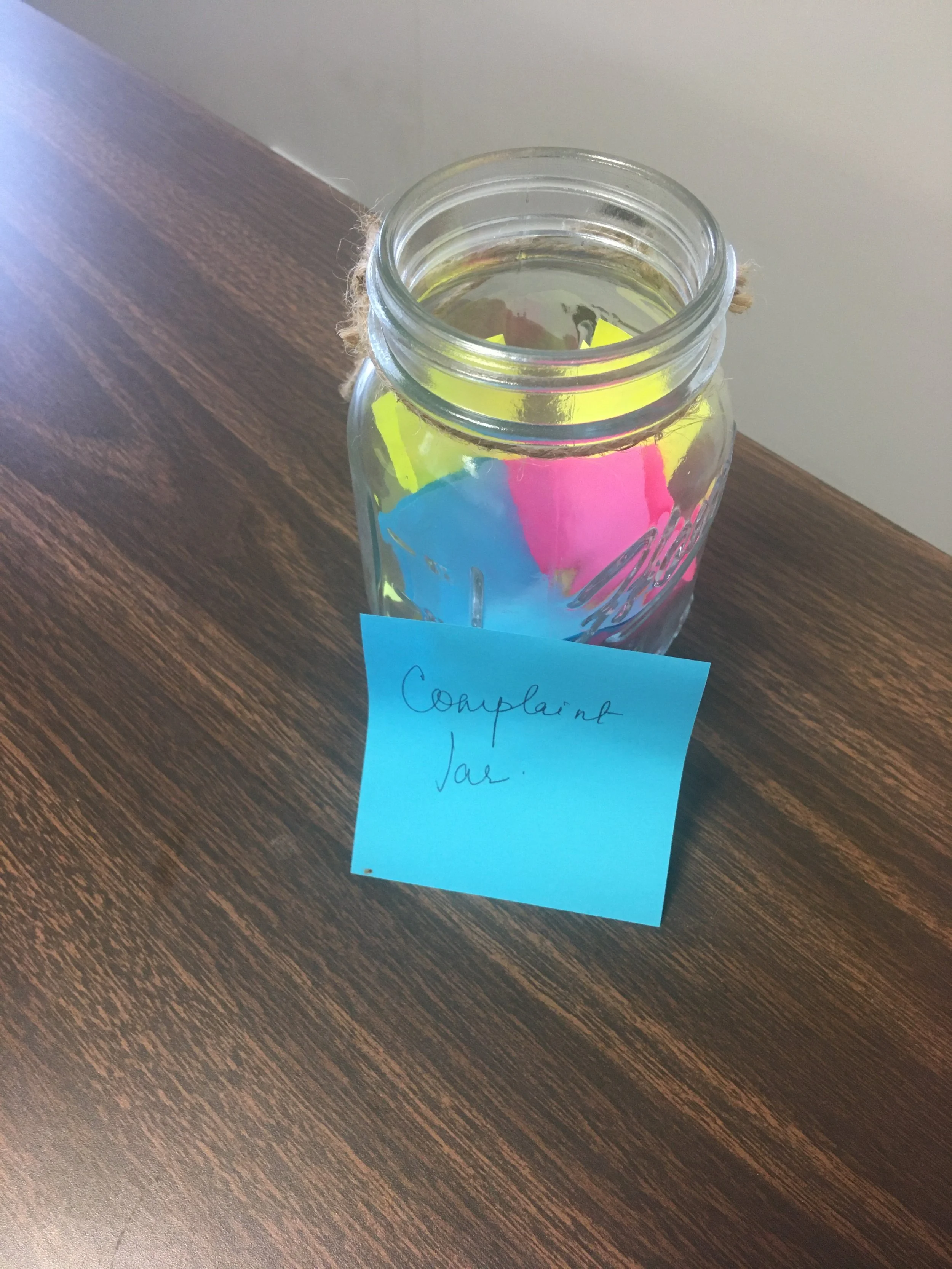
Chatterjee, Sritama (2023) "Reimaging Feminist Futures Through Complaint-jar Activity," Feminist Pedagogy: Vol. 3: Iss. 4, Article 8.
Off-Shore Aesthetics and Waste in the Ship-Breaking Literature of Bangladesh
Ship-breaking is a flourishing industry in Bangladesh where thousands of decommissioned ocean-going vessels from developed nations such as the USA, Britain, and France are broken down at relatively cheap prices. This causes marine pollution, poses serious challenges to coastal management, and risks the lives of shipbreaking laborers. In the last decade, literary and cultural texts have responded to the environmental crisis of waste generation in the ship-breaking industry of Bangladesh. I read two literary texts, namely Tahmima Anam’s novel The Bones of Grace (Citation2016) and Cameron Conaway’s poetry collection Chittagong (2014) to show how literary texts adapt their formal properties to communicate the dialectic of recycling and disposability of shipbreaking in language. I coin the term “off-shore aesthetics” to signal a set of narrative, poetic and visual practices in the literature on ship-breaking in Bangladesh that makes the site visible and illustrates the material impact of waste on the laborers. This reading of ship-breaking offers “off-shore aesthetics” as a model of literary criticism that captures the fragmentary nature of the off-shore as a place while providing an opportunity to reflect on the function of shipbreaking labor in global capitalism through form and poetics.
Granularity of Environments: Method, Argument, Provocation?
A shipworm clawing away at the bottom of the undersea, disrupting the logistics of communication. Companies pay a huge amount of money to a ship carrying sludge (unprocessed waste) only because the oil that the vessel carries is of high extractable value. I start with these instances of the small, tiny, and discarded not only to exercise granularity as a method that replicates Laleh Khalili’s (2020) form of writing in Sinews of Trade and War but also to demonstrate how granularity is an operational anchor in the book. Taking a cue from my colleague Johan Mathew’s explication of sinews as bodily ligaments and muscles that hold together the structure of capitalism (see his contribution to this Codex), I offer that the sinews in Khalili’s book can be read as granular and invisible exchanges that characterize capitalism as well as environments in a transnational circuit of profit and loss.
Reimagining Feminist Futures Through Complaint Jar Activity
In this article, I describe and reflect on my experience developing and implementing a “complaint jar activity” in a writing-intensive, literature general education class, titled “Women and Literature,” themed on Feminist Futures: Place, Theory, and Method. The activity was inspired by Sara Ahmed’s lecture, “Complaint as Feminist Pedagogy,” based on her recently published book Complaints. The book and the blog focus on testimonies of complainants and what each story could teach not only about violence and inequity in the academy but also about the nature of institutions and their complicity in shielding the perpetrators. Reading the testimonies calls for emotional labor. Reflecting on complaints as a discursive site where futures of institutional mechanisms are reimagined requires a different kind of intellectual and affective labor. Such an act recognizes the difficult nature of navigating an already illegible process as well as envisioning the tangible changes that feminist pedagogy can enable in the classroom and beyond. My article follows Ahmed’s invitation to make space for this messy and complex nature of feminist work in the academy while at the same time being attentive to the small transformations that the classroom can bring at a time of increasing anti-intellectualism.
SECOND PROJECT : AESTHETICS OF ANTICOLONIAL ENVIRONMENTALISMS
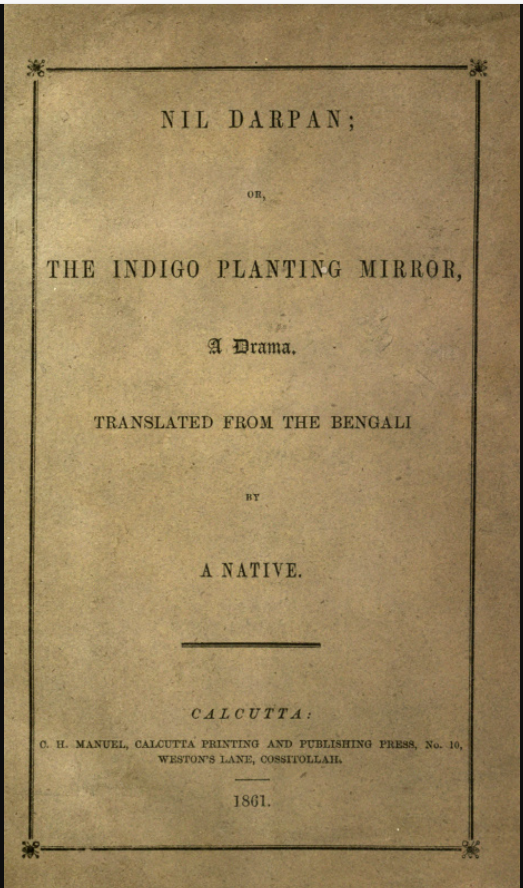
My second project “Aesthetics of Anticolonial Environmentalisms” takes up the value of anticolonial poetic pasts towards reimagining radical futures of environmentalism in the Global South. Drawing upon archives of anticolonial writing, textual literature (pamphlets, zines, manifestos) written from movement spaces and novels, and poetry written in response to environmental movements, my second project argue for the centrality of environmentalism in anticolonial social movements to write a postcolonial literary history. Rather than a conventional reading of colonized/activists writing back to the colonizer, I re-stage the conversations to show how different forms of environmentalisms in the Indian Ocean world were in dialogue among themselves and what that offers us for reading contemporary environmental movements.

Editing
Special Issue on Indian Ocean Digital Humanities
Special cluster on Water Pedagogies From the Academy and Beyond
Co-edited special issue on Gender and Climate Justice